
As of February 3, 2017, this version of the NewLights Press IDE(A/O)(B)LOG(Y/UE) is officially retired. We have switched, finally, to a proper website that will also contain a blog. This older blog and all of the writing will remain up and accessible for as long as Google lets us.
But please click on through to the new site to see what we are up to: www.newlightspress.com
20170203

20170126
CODEX 2017!

NewLights will be there, with a bunch of new books, including the The New Manifesto of the NewLights Press (third iteration) and Alphabet One: A Submanifesto of the NewLights Press. Perhaps will we see you there? More info on the CODEX fair here.
20151021
THE MILLS COLLEGE BOOK ARTS PROGRAM IS IN DANGER

Hello Friends of Books and Art and everything in between:
Mills College has decided to axe its fantastic Book Arts program, which includes a dual MFA in Creative Writing and Book Arts. In terms of programs like this, it is a model for others--I look to it as what the program at Colorado College could be. And in a larger sense the cutting of the program follows a larger, distressing pattern in higher ed. where small, interesting, rare programs are cut in favor of bland, corporate sameness. If you care about books and art and book arts and education, please take a moment to sign and share this petition.
And here is a website with more info and testimonies from current and former students of the program: http://savemillsbookart.tumblr.com/
20150507
REAEDR MAGAZINE: CALL FOR SUBMISSIONS

ABOUT THE MAGAZINE
REAEDR is a magazine of one word poetry, fiction, and nonfiction, produced by the NewLights Press in Colorado Springs, CO. Each issue is built around a particular theme, and that theme, as well as the pieces inside, will determine the form, shape, color, material, processes, etc. of the issue. 2015 will be the “pilot year,” with two issues planned: WAR in the summer (tentative release of mid-August 2015) and “FUCK EM IF THEY CANT TAKE A JOKE” in the fall/winter (tentative release of December 2015). The goal is to be publishing quarterly or bi-monthly in 2016.
THEMES & DEADLINES
Last update: May 7, 2015.
This page will be updated with the current themes and issues as old ones expire and new ones are added. It will always be accessible through the sidebar, under the heading REAEDR MAGAZINE.
Issue 1: WAR (Summer 2015): June 5, 2015
Issue 2: “FUCK EM IF THEY CANT TAKE A JOKE” (Fall/Winter 2015): September 1, 2015
Submissions for each issue will be accepted up until 5 PM (US Mountain Time) on the date listed. Occasionally the changing form of the magazine will require some extra steps on the part of the author for accepted pieces. These will be communicated as required.
WHAT TO SUBMIT
We are looking for one word, or one-word, poetry, fiction, and nonfiction, related in some way to the theme of the issue(s). Submissions can be “straight text,” or visual (but still text-based) in nature. We also welcome submissions that play with, challenge, interrogate, or complicate the “one word” form. Authors/artists may submit up to five pieces for consideration in each issue. Each piece must be submitted in one of the three categories: poetry, fiction, or nonfiction. Translations and submissions in languages other than English, “real” or “not,” are welcome.
HOW TO SUBMIT
Submissions should be made via email, to editor Aaron Cohick at newlightspressATgmailDOTcom. The actual pieces can be typed in the body of the email, attached as PDFs, Microsoft Word docs, or RTFs. Please use PDFs, JPEGs or TIFFs for image submissions, at least 300 dpi at 100% size. Please write first if attachments are too big to send via email. ALL SUBMISSIONS MUST INCLUDE THE FOLLOWING IN THE BODY OF THE EMAIL:
AUTHOR’S NAME: How it should be printed. No anonymous submissions please. Pseudonymous submissions are fine. Do not include a bio.
MAILING ADDRESS: For contributor copies.
THEME: Please include which theme you are submitting each piece for. See above for current and past themes.
CATEGORY: All submissions must be made in a category: poetry, fiction, or nonfiction. A category is required for each piece submitted.
THE PIECE(S): An individual submission can include up to 5 separate pieces. Clearly indicate title, if there is one. “Untitled” is a title, and will be treated as such. Please put each piece on its own page(s).
PROOFS: We will do our best to send each author digital proofs of their piece(s) before each issue goes into production.
COMPENSATION: Here in these opening stages, compensation for authors/artists will be in the form of two contributor’s copies. We hope to be able to include monetary compensation as well, after things get rolling (the target price point for each issue will be $5 to $8).
DISTRIBUTION: The first two issues will be printed in editions of 100 copies. Most distribution will happen through direct sales and subscriptions via this website. (Subscriptions will be available for purchase in the near future.) We hope to make some copies available for sale in bookstores or art galleries. Please contact us if you are a proprietor or curator for such a place, or if you just know of a good place for that.
In 2003 the NewLights Press (working under the imprint “Tin Woodsman Editions”) published a proto-issue of REAEDR. The digital archive version is below. We don’t really expect REAEDR to look anything like this, but hey, these things go where they want or need to go.
20150505
& MOVING ALONG NOW (15 YEARS)

Well, the NewLights Press has been in existence for 15 years. I’m not quite sure what this means, other than that there is still so much more work to do. But a great deal has been done: 41 titles, 10 or so broadsides (some co-published with the Dolphin Press at MICA and not shown on this blog), numerous posters and ephemerations. Readings, workshops, panels, book fairs. Friends and family. Exhaustion and gratitude.
I am, I believe, optimistic about the future. New spaces and new forms are emerging, and perhaps new work can be done.
This year will be a hiatus: there will be no “official” Say Hello to Your Last Poem! readings—but there will probably be some summer readings at Mountain Fold Books.
This year will be a fullness: a summer class at Naropa, and at Colorado College. Some personal events of note. & books: the third iteration of The New Manifesto of the NewLights Press, potentially a supplement or submanifesto to go along with it, a book of poems by Marina Eckler, some new, larger artists’ books, a coloring book, the REAEDR magazine, and some things certainly unplanned.
There is an urgency, and an inarticulation. A dis-speaking, diswriting. Language continues to fail. The alphabet breaks apart, worn away like all things in the world. Can we write or print or make beyond or outside of it? Is there a book or something else, there, outside? Is there an outside there? Or is this a bringing inside? Here?
Imagine an object, or a life, stripped down to its richness.
Attention is the only thing worth paying.
Incomplete & potential.
To move & to dwell.
***
To mark the 15 year anniversary this week, some gifts for you:
SALE! All books and broadsides are on sale, 15% off, through next Tuesday, 5/12/15. The listed prices are the same, but when you click the button it should be 15% less.
FREE! We have released three new digital archive books: The New Manifesto of the NewLights Press (second iteration), Anna’s Half / Anselm’s Half, by Anna Moschovakis and Anselm Berrigan, and Divya’s Half / Mathias’s Half, by Divya Victor and Mathias Svalina. Scroll down for those.
SUBMIT! On Thursday we will release, finally, the call for submissions for REAEDR, the magazine of one word poetry, fiction, and nonfiction.
GATHER! There will be a reading/party at Mountain Fold Books in Colorado Springs on Saturday, May 30. Events TBD, but most likely some sort of artist’s talk about NewLights, and some poetry.
As always, thank you for reading. Your presence makes the world.

NOW (NON)LIVE ONLINE: DIVYA’S HALF / MATHIAS’S HALF
& here here is the third of three digital archive books being released today, May 5, 2015, for the 15 year anniversary of the NewLights Press. Divya’s Half / Mathias’s Half was the first Say Hello to Your Last Chapbook! chapbook published in the 2014 series. This one is also an accordion dos-a-dos, so like the Anna/Anselm book, the digital version is divided into two separate files.

Divya’s Half / Mathias’s Half
Poems by Divya Victor and Mathias Svalina
40 pages, softcover, saddle-stapled, accordion dos-a-dos, 7” x 5.25”
Digitally printed text pages with letterpress (woven collagraph & lead type) cover
Edition of 100
2014
Out of Print

Divya’s Half / Mathias’s Half
Poems by Divya Victor and Mathias Svalina
40 pages, softcover, saddle-stapled, accordion dos-a-dos, 7” x 5.25”
Digitally printed text pages with letterpress (woven collagraph & lead type) cover
Edition of 100
2014
Out of Print
NOW (NON)LIVE ONLINE: ANNA’S HALF / ANSELM’S HALF
& here is the second of three digital archive books being released today, May 5, 2015, for the 15 year anniversary of the NewLights Press. This is Anna’s Half / Anselm’s Half, the first in the Say Hello to Your Last Chapbook! series, published in July of 2013. This book is bound as an accordion dos-a-dos (see image below), so the digital version is divided into two separate “books.”

Anna’s Half / Anselm’s Half
Poems & things by Anna Moschovakis and Anselm Berrigan
36 pages, softcover, saddle-stapled, accordion dos-a-dos, 7” x 5.25”
Digitally printed text pages with letterpress (collagraph & lead type) cover
Edition of 100
2013
Out of Print

Anna’s Half / Anselm’s Half
Poems & things by Anna Moschovakis and Anselm Berrigan
36 pages, softcover, saddle-stapled, accordion dos-a-dos, 7” x 5.25”
Digitally printed text pages with letterpress (collagraph & lead type) cover
Edition of 100
2013
Out of Print
NOW (NON)LIVE ONLINE: THE NEW MANIFESTO OF THE NEWLIGHTS PRESS (second iteration)
Here is the first of three digital archive books being released today, May 5, 2015, for the 15 year anniversary of the NewLights Press. This is the second iteration of The New Manifesto of the NewLights Press:
The New Manifesto of the NewLights Press (second iteration)
20 pages, softcover, saddle-stapled, 6.5” x 5.5”
Letterpress from photopolymer plates and collagraph
Unlimited, iterative edition
2013
Out of Print
PS: Expect the third iteration, as well as supplement/submanifesto by the end of 2015.
The New Manifesto of the NewLights Press (second iteration)
20 pages, softcover, saddle-stapled, 6.5” x 5.5”
Letterpress from photopolymer plates and collagraph
Unlimited, iterative edition
2013
Out of Print
PS: Expect the third iteration, as well as supplement/submanifesto by the end of 2015.
20141103
BOOK TV (?) WITH THE PRESS AT COLORADO COLLEGE!

The sister press of NewLights, The Press at Colorado College, was featured in a piece on C-SPAN2 Book TV's Cities Tour. It shows some students from a History class printing on the Vandercook for the first time, and NewLights/Press at CC proprietor Aaron Cohick talking about letterpress printing & making books by hand, and why, why, why. The image above is a screenshot, but you can watch the whole video here: http://www.c-span.org/video/?321938-1/press-colorado-college
(And the broadsides on press in the video are a short poem by CJ Martin.)
20140901
LABOR DAY HOLIDAY (NO SYSTEM IS CLOSED)
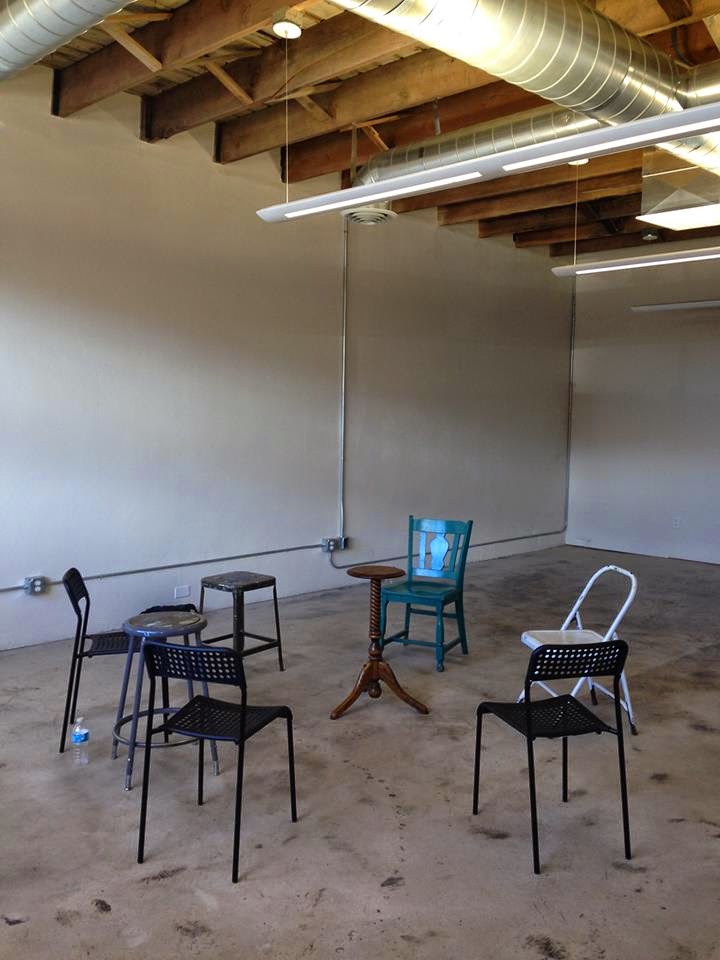
There has been a lot of growth in our (still) little print-book-publishing community here in COS in the past year: new independent artists, new publishers, new community studios, new recording studios, new zines, new letterpress studios. It’s been wonderful, amazing, and I can’t wait to see how far we can take this.
The first part of a lively scene is the people doing the work. We’re getting us some people, making us some work. The second part is a place where those people can gather, to share their work with other people also gathered. To bring those “other people” (the public, let’s say) in, to let the artists already there out, to make those “other people” not “other,” but people, each belonging in their individual way.

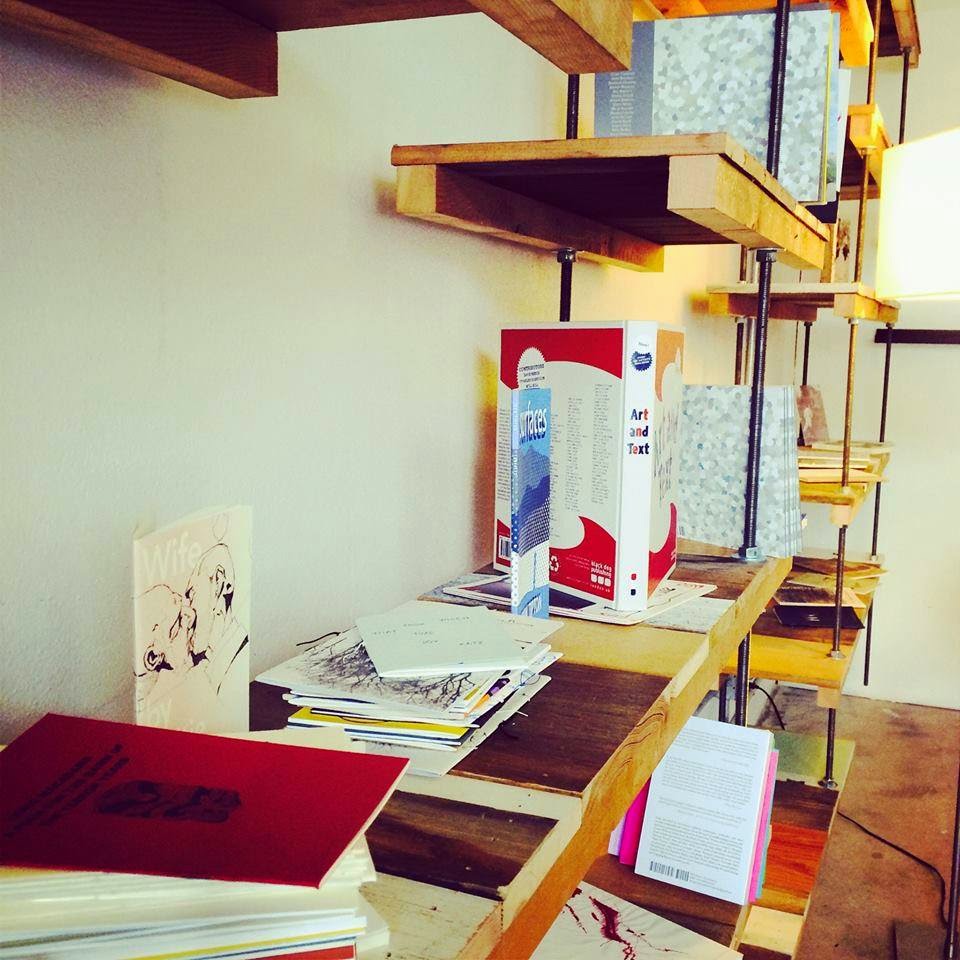
A secret group with a static membership does not grow as a community, plays no role as a group in the larger community. A place of sharing & gathering & growing/changing is crucial. One such place is on the verge of opening in south downtown Colorado Springs: Mountain Fold Books. (Full disclosure: I am a board member of Mountain Fold, and I believe fiercely in the project.) The description from the MFB website:
Mountain Fold Books is a new kind of bookstore. We're a non-profit, membership-based bookstore and reading room/gallery that will make small-press books and magazines accessible to the community of Colorado Springs and the greater Pikes Peak Region. While we have an amazing library district and two university libraries, small-press books of poetry and art books remain difficult to access. Our aim is to help connect Colorado Springs to the growing art and literary communities along the Front Range of Colorado by providing a welcoming place for the community to gather, read, exchange ideas, give readings and see books and art that currently can only be found in larger metropolitan areas.We are entering the last week of Mountain Fold’s first Membership Drive & Fundraiser. Success in this endeavor means that MFB will be funded until July of 2015, which means that the folks in charge can focus on making it the crucial thing that it needs to be, that this community needs, and that the small press-artists’ book-zine-print-etc. community at large needs. All of the information that you need to make your (tax deductible) donation is here:
http://www.mountainfoldbooks.org/shop/
20140813
SAY HELLO TO YOUR LAST CHAPBOOK! j/j hastain & NOEL BLACK!

& the second of two for today, this day, August 13, our last day of summer, not really: Transister / Identity Colleges by j/j hastain and Noel Black. Say Hello to Your Last Chapbook! 2014, No. 5. The fifth of five books produced in the last three months.


Transister / Identity Colleges is another single-spine dos-a-dos book, featuring brand new work from both authors—some individual pieces written to common themes, and one directly collaborative poem called “Pinky Swear.”


From the colophon(s):
This book was made for a reading by Noel Black and j/j hastain, the fifth in the 2014 Say Hello to Your Last Poem! series, on August 9, 2014 in Manitou Springs, CO. Many hands and hearts participated, with the reading series and this book: Marina Eckler, Noel Black, Corie Cole and Aaron Cohick. […]
The covers were printed using a combination of letterpress printed lead type, chipboard and vinyl collagraphs, and digitally printed photographic images. The text pages were laser printed. All of the photographs forming the title lettering are by j/j hastain. The paper is from the French Paper Company, made with recycled content and hydroelectric power. Title lettering design by NewLights. 100 copies were made […]


About the authors:
j/j hastain is a collaborator, writer and maker of things. j/j performs ceremonial gore. Chasing and courting the animate and potentially enlivening decay that exists between seer and singer, j/j, simply, hopes to make the god/dess of stone moan and nod deeply through the waxing and waning seasons of the moon.


Noel Black is the author of La Goon, Furniture Press Books, 2014; Uselysses, Ugly Duckling Presse, 2011 and the publisher of The New Heave-Ho, a new .pdf press at thenewheaveho.blogspot.com. With Corie Cole, Marina Eckler and Aaron Cohick, he's the co-host of the Say Hello to Your Last Poem! Reading Series in Colorado Springs.

Transister / Identity Colleges
Say Hello to Your Last Chapbook! 2014, No. 5
Poems by j/j hastain & Noel Black
32 pages, saddle stapled dos-a-dos
7” x 5.25” (closed)
Laser printed interior, laser and letterpress (collagraph & lead type) cover
Edition of 100
2014
$8 (plus shipping)
SAY HELLO TO YOUR LAST CHAPBOOK! JEN HOFER AND TC TOLBERT!

Two more, the sweet last two, chapbooks from the 2014 Say Hello to Your Last Chapbook! series are out today. First up for August 13: Conditions / Conditioning by Jen Hofer & TC Tolbert.


This book is a single-spine dos-a-dos, written in direct collaboration by the two authors specifically for the format, specifically for this publication. It’s an honor to have had the opportunity to provide an opportunity (as TC said, “a space”) for these two poets to work together. And it was fun to collaborate with them on the design as well—it pushed NewLights into new (for us) territory—making a type ornament using actual font design software….


There is no colophon in the book, because there is no space for “end matter,” but if there was it might go something like this:
This book was made for a reading by Jen Hofer & TC Tolbert, the fourth in the Say Hello to Your Last Poem! series, on July 29, 2014 In Manitou Springs/Colorado Springs, CO. Corie Cole helped with proofreading, and CJ Martin & Julia Drescher helped with binding.
The covers were printed using a combination of letterpress and digital processes: the pattern on the interior was laser printed, and the rest of the colors/elements were letterpress printed from chipboard collagraphs or lead type. The text pages were laser printed. All of the paper is from the French Paper Company, made using hydroelectric power and recycled content. The typefaces are Adobe and ATF Garamonds. Title lettering and ornament design by NewLights. 100 copies were made.


About the authors:
Jen Hofer is a Los Angeles-based poet, translator, social justice interpreter, teacher, knitter, book-maker, public letter-writer, urban cyclist, and co-founder of the language justice and literary activism collaborative Antena. Her books are available from numerous small presses, including Action Books, Atelos, Counterpath Press, Dusie Books, Kenning Editions, Insert Press, Les Figues Press, Litmus Press, LRL Textile Editions, Palm Press, Subpress, Ugly Duckling Presse, and in various DIY/DIT incarnations.

TC Tolbert is a feminist queer, a poet, and a teacher. S/he’s the author of Gephyromania (Ahsahta Press) and the chapbooks i:not he:not i (pitymilk press), spirare (Belladonna), and territories of folding (Kore Press). S/he co-edited Troubling the Line: Trans and Genderqueer Poetry and Poetics (Nightboat Books), and is Assistant Director of Casa Libre en la Solana in Tucson, where s/he lives.

Conditions / Conditioning
Say Hello to Your Last Chapbook! 2014, No. 4
Poems by Jen Hofer and TC Tolbert
32 pages, saddle stapled dos-a-dos
7” x 5.25” (closed)
Laser printed interior, laser and letterpress (collagraph & lead type) cover
Edition of 100
2014
$8 (plus shipping)
OUT OF PRINT
20140710
SAY HELLO TO YOUR LAST CHAPBOOK! ALEXIS ALMEIDA, OREN SILVERMAN & SARA RENEE MARSHALL

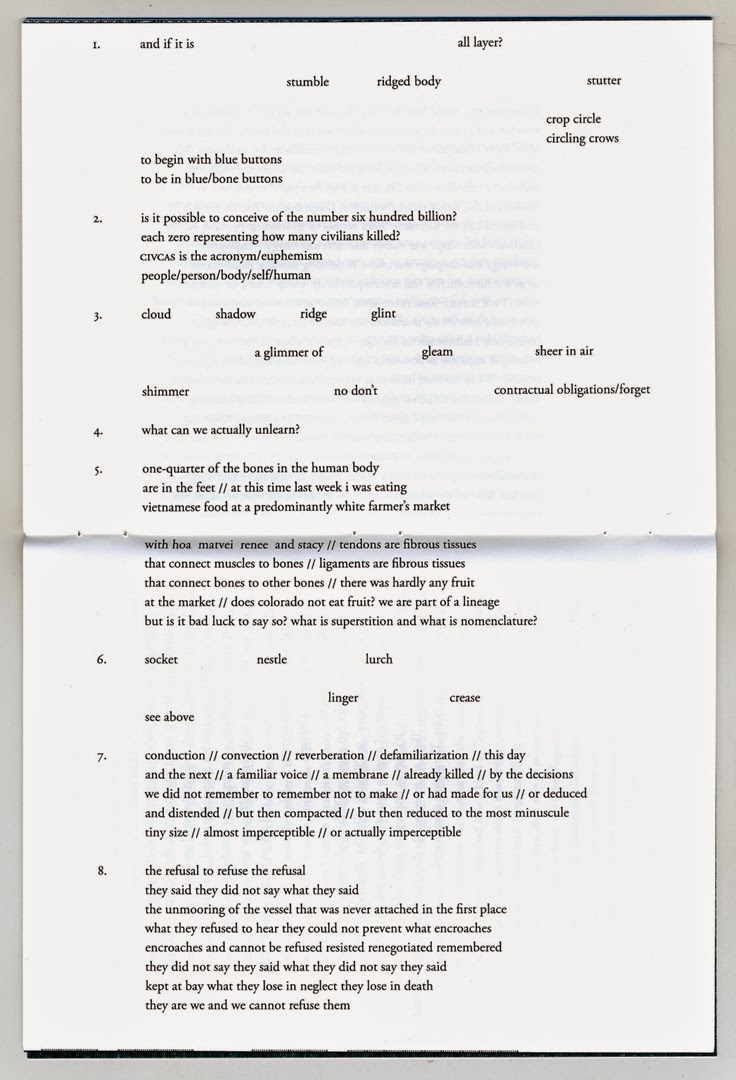
And the second book of this July 10, number 3 in this year’s Say Hello to Your Last Chapbooks series: Alexis, Oren & Sara’s Halves, with poems by Alexis Almeida, Oren Silverman and Sara Renee Marshall.
Because this one has three halves and thus a lack of symmetry, it had to become a traditional single signature, sewn codex. But there is still a retina-searing surprise inside.


From the colophon:
This book was made for a reading by Alexis Almeida, Oren Silverman & Sara Renee Marshall on July 5, 2014, part of the Say Hello to Your Last Poem! series. If only we were allowed to talk about that.
Many hands & eyes go into each of these rapid chapbooks. Noel Black assisted with proofreading, Corie Cole helped with binding and other intangible aspects.
This book was designed, printed & bound by the NewLights Press. The text pages were laser printed. The covers were letterpress printed from lead type and MDF/chipboard collagraphs. All of the paper is from the French Paper Company, made with recycled content and hydroelectric power. The text typefaces are Adobe and ATF Garamonds. The modular titling lettering is another variation of a design by NewLights. 100 copies were made.
About the authors:

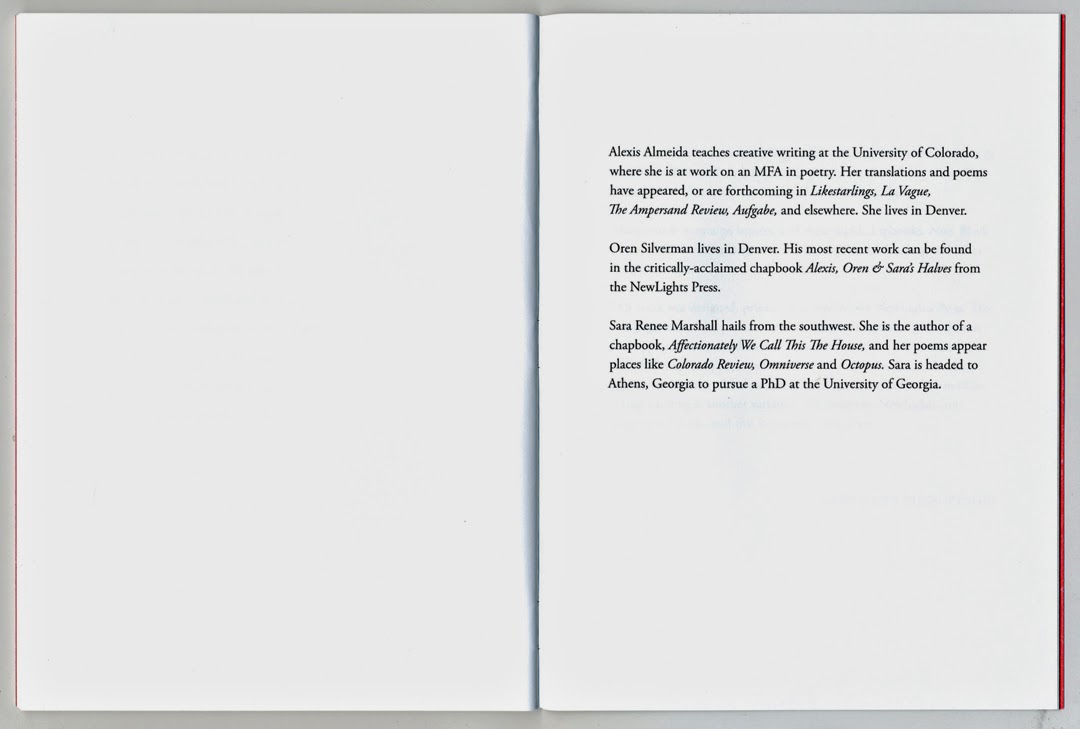
Alexis Almeida teaches creative writing at the University of Colorado, where she is at work on an MFA in poetry. Her translations and poems have appeared, or are forthcoming in Likestarlings, La Vague, The Ampersand Review, Aufgabe, and elsewhere. She lives in Denver.

Oren Silverman lives in Denver. His most recent work can be found in the critically-acclaimed chapbook Alexis, Oren & Sara's Halves from the NewLights Press.

Sara Renee Marshall hails from the southwest. She is the author of a chapbook, Affectionately We Call This The House, and her poems appear places like Colorado Review, Omniverse and Octopus. Sara is headed to Athens, Georgia to pursue a PhD at the University of Georgia.
Alexis, Oren & Sara’s Halves
Say Hello to Your Last Chapbook! 2014, No. 3
Poems by Alexis Almeida, Oren Silverman & Sara Renee Marshall
36 pages, saddle stapled pamphlet
7” x 5.25” (closed)
Laser printed interior, cover letterpress printed from lead type and chipboard collagraphs
Edition of 100
2014
$8 (plus shipping)
SAY HELLO TO YOUR LAST CHAPBOOK! CJ MARTIN & JULIA DRESCHER

Today, on this day, July 10, 2014, the NewLights Press is releasing two new chapbooks from the Say Hello to Your Last Chapbook! Series. The first is CJ’s Half / Julia’s Half, poems by CJ Martin and an essay (excerpt) by Julia Drescher.
This accordion dos-a-dos edition features variable covers printed from a flexible matrix of unfixed vinyl strips stretched across a plexiglass block. Here are some of the covers:


From the colophon(s):
This book was designed & printed by the NewLights Press. The text pages were laser printed and the covers were letterpress printed from lead type, flexible vinyl collagraphs and chipboard collagraphs. All of the paper is from the French Paper Company, made with recycled content and hydroelectric power. The text was set in Adobe and ATF Garamonds. The modular title lettering was designed by NewLights. 100 copies of the book were made.
This book was made for a reading by CJ Martin and Julia Drescher on Saturday, June 21, 2014, as part of the Say Hello to Your Last Poem! reading series in Colorado Springs, Chris and Julia’s new home. It seems that with each book our star-cross’d crew grows, and we are so grateful: folded, collated and stapled by Marina Eckler, Noel Black, Corie Cole, Aaron Cohick, CJ Martin, Julia Drescher and Natalia Jaeger. Thank you for reading.


About the authors:
C.J. Martin is the author of Two Books (Compline, 2011), as well as four chapbooks: 2012 (Supersuperette, 2013), Unused Cover (Portable Press @ Yo-Yo Labs, 2013), 1978 (Self-published, 2010); WIW?3: Hold me tight. Make me happy (Delete Press, 2009); Lo, Bittern (Atticus/Finch, 2008) and CITY (Vigilance Society, 2007). For the past two years, he has been working on broadside collaborations with poets who do visual art. His essays and reviews have appeared in ON: Contemporary Practice, Jacket2, American Book Review, and elsewhere. He lives in Colorado Springs, CO, and works as a bookbinder. With Julia Drescher, he publishes Further Other Book Works.

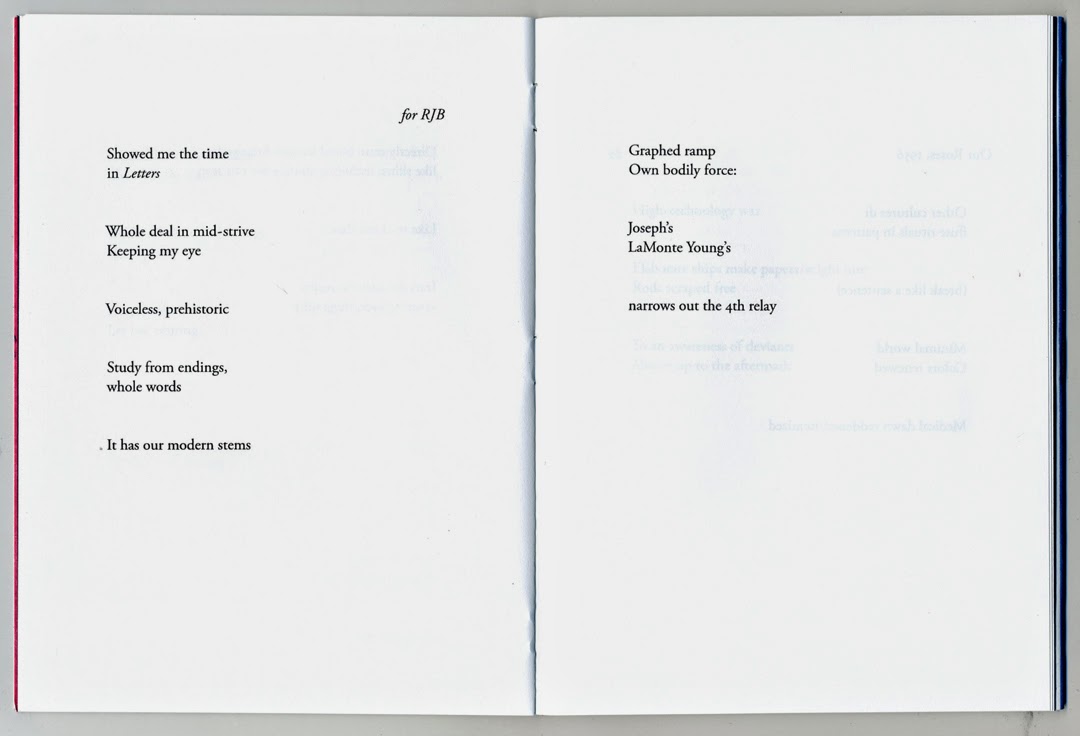
Julia Drescher is the author of the chapbooks Plural Bell (LRL Textile series) and Birds Of Paradise (Ypolita Press) and her most recent poems may be found, or are forthcoming, in Aufgabe, Dusie, Likestarlings, the *belladonna chaplets series and Omniverse. She lives in Colorado Springs.
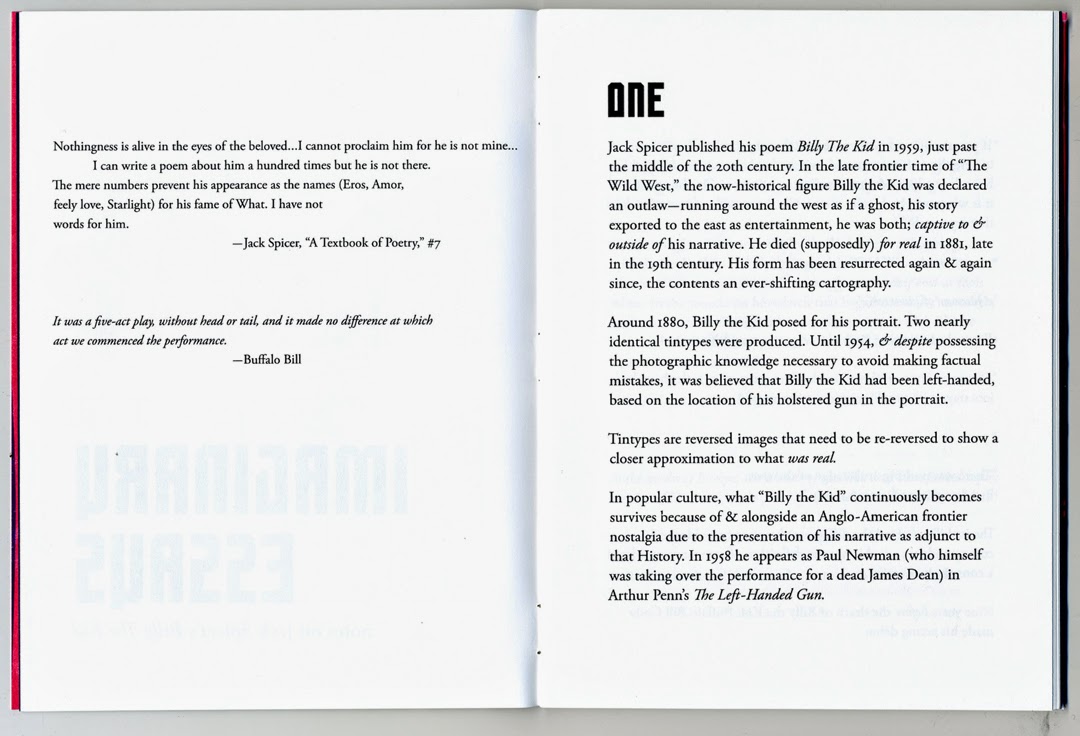

CJ’s Half / Julia’s Half
Say Hello to Your Last Chapbook! 2014, No. 2
Poems by CJ Martin & and essay Julia Drescher
40 pages, saddle stapled dos-a-dos binding
7” x 5.25” (closed)
Laser printed interior, cover letterpress printed from lead type, chipboard collagraphs and unfixed vinyl strip collagraphs
Variable edition of 100
2014
$8 (plus shipping)
OUT OF PRINT
Subscribe to:
Posts (Atom)


 Posts
Posts


